What Is Swap In Derivatives Investing
Understand what a swap is in derivatives investing, how it works, types, benefits, and risks to make smarter financial decisions.
Introduction to Swaps in Derivatives Investing
When you dive into derivatives investing, swaps are one of the key instruments you'll encounter. They are contracts that let two parties exchange financial obligations or cash flows over time. Understanding swaps can help you manage risks or speculate effectively in the financial markets.
In this article, we'll explore what swaps are, how they work, different types, and why investors use them. By the end, you'll have a clear grasp of swaps and how they fit into your investment toolkit.
What Is a Swap?
A swap is a financial agreement between two parties to exchange cash flows or liabilities based on specified terms. These contracts typically involve swapping interest payments, currencies, or other financial instruments.
Swaps are over-the-counter (OTC) contracts, meaning they are privately negotiated.
They help manage risks like interest rate changes or currency fluctuations.
Swaps usually last for several years with periodic payments.
Unlike buying stocks or bonds, swaps don’t involve ownership of an asset but rather the exchange of financial benefits or obligations.
How Do Swaps Work?
In a swap, two parties agree to exchange cash flows based on a notional principal amount. This principal is not exchanged but used to calculate payments.
Each party pays the other based on different interest rates or currency values.
Payments are usually made at regular intervals, like quarterly or annually.
The goal is to reduce exposure to risks or gain from market movements.
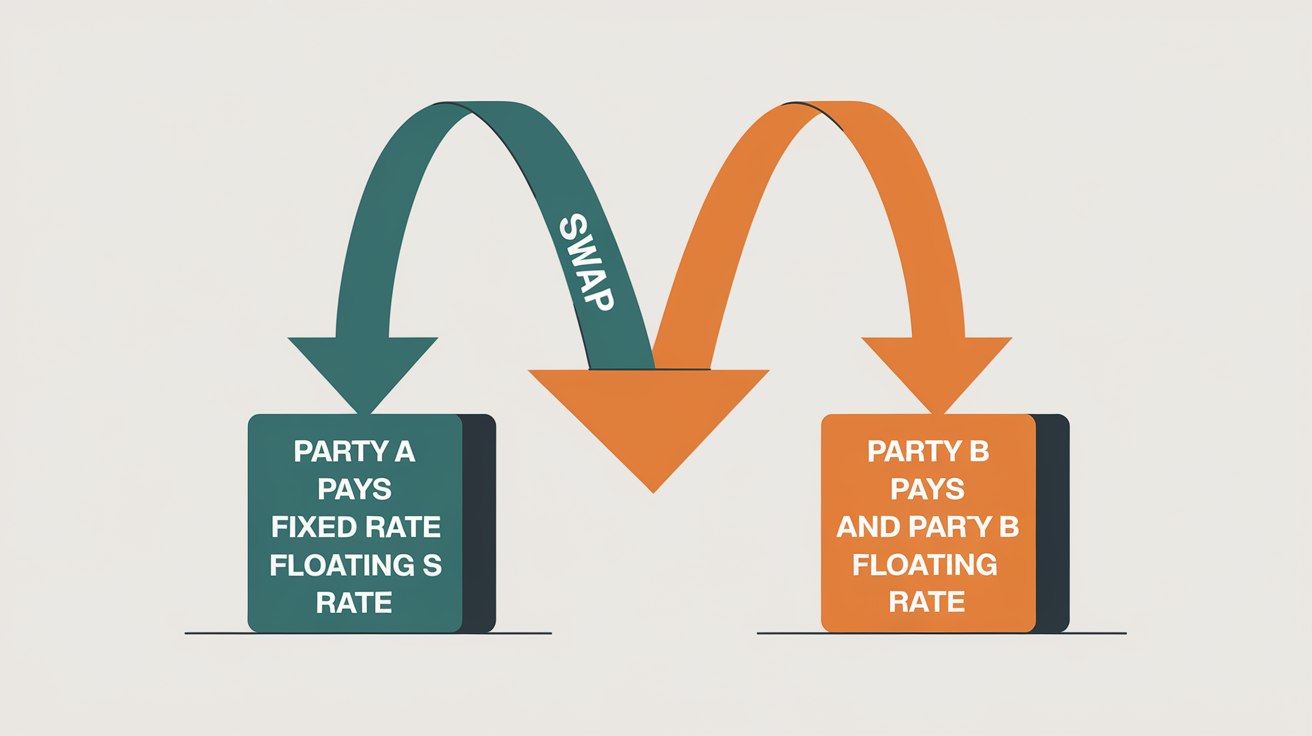
For example, one party might pay a fixed interest rate while receiving a floating rate from the other. This helps balance their financial exposure.
Common Types of Swaps
Swaps come in various forms, each serving different purposes. Here are the most common types:
- Interest Rate Swaps:
Exchange fixed interest payments for floating rates or vice versa.
- Currency Swaps:
Exchange principal and interest payments in different currencies.
- Commodity Swaps:
Swap cash flows related to commodity prices like oil or gold.
- Credit Default Swaps (CDS):
Transfer credit risk of a borrower between parties.
Each type helps investors or companies manage specific financial risks or speculate on market changes.
Benefits of Using Swaps
Swaps offer several advantages for investors and businesses:
- Risk Management:
Protect against interest rate or currency fluctuations.
- Cost Efficiency:
Often cheaper than other hedging methods.
- Flexibility:
Customized terms to fit specific needs.
- Access to Markets:
Enter markets or financial positions otherwise difficult to reach.
These benefits make swaps a popular tool for managing complex financial exposures.
Risks Associated with Swaps
While swaps can be useful, they also carry risks you should consider:
- Counterparty Risk:
The other party may default on payments.
- Market Risk:
Changes in interest rates or currencies can cause losses.
- Liquidity Risk:
Swaps are OTC and may be hard to unwind quickly.
- Complexity:
Understanding terms and valuations can be challenging.
Proper due diligence and risk management are essential when dealing with swaps.
How Investors Use Swaps
Investors and companies use swaps for various strategic reasons:
- Hedging:
Protect existing investments from adverse market moves.
- Speculation:
Profit from expected changes in interest rates or currencies.
- Arbitrage:
Exploit price differences between markets.
- Balance Sheet Management:
Adjust asset-liability profiles.
Swaps can be tailored to fit specific financial goals, making them versatile tools.
Example of an Interest Rate Swap
Imagine a company has a loan with a floating interest rate but prefers fixed payments for budgeting. It enters an interest rate swap with a bank:
The company agrees to pay a fixed rate to the bank.
The bank pays the company a floating rate based on market benchmarks.
Net payments are exchanged periodically, stabilizing the company’s interest expenses.
This swap helps the company avoid uncertainty from fluctuating rates.
Regulation and Transparency
Swaps are regulated to reduce systemic risks in financial markets. Key points include:
Many swaps must be reported to trade repositories.
Clearinghouses often act as intermediaries to reduce counterparty risk.
Regulations vary by country but aim to increase transparency.
Understanding regulatory requirements is important before entering swap agreements.
Conclusion
Swaps are powerful derivatives that let investors and companies exchange financial risks and cash flows. They come in many forms, including interest rate, currency, and credit default swaps.
While swaps offer benefits like risk management and flexibility, they also carry risks such as counterparty default and market volatility. Knowing how swaps work and their uses can help you make smarter investment decisions and manage your financial exposure effectively.
What is a swap in derivatives investing?
A swap is a contract where two parties exchange financial cash flows or obligations, often to manage risks like interest rates or currency changes.
What are the main types of swaps?
Common types include interest rate swaps, currency swaps, commodity swaps, and credit default swaps, each serving different financial purposes.
How do interest rate swaps work?
They involve exchanging fixed interest payments for floating rates or vice versa, helping parties manage interest rate exposure.
What risks should I consider with swaps?
Risks include counterparty default, market fluctuations, liquidity issues, and the complexity of understanding swap terms.
Can individual investors use swaps?
While swaps are mostly used by institutions, some sophisticated individual investors access swaps through funds or brokers with proper knowledge and risk management.