What is Section 232 Trade Expansion Act?
Learn about Section 232 Trade Expansion Act, its role in U.S. trade policy, and how it impacts national security and tariffs.
Introduction to Section 232 Trade Expansion Act
Understanding trade laws is essential for grasping how countries protect their economic interests. One key U.S. law is the Section 232 Trade Expansion Act. It plays a vital role in shaping trade policies related to national security.
In this article, we will explore what Section 232 is, how it works, and why it matters for businesses and the economy. You will learn how this law influences tariffs and trade decisions in the United States.
What is Section 232 of the Trade Expansion Act?
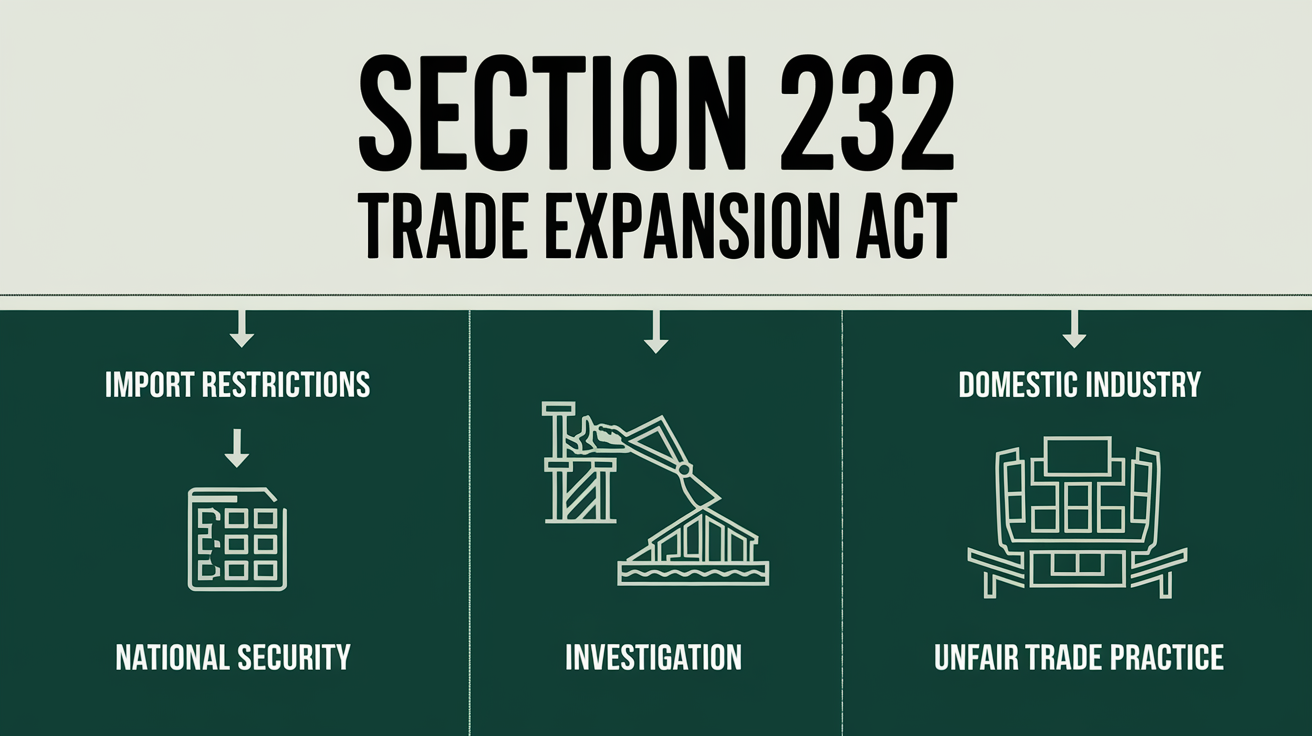
Section 232 is a provision in the Trade Expansion Act of 1962. It authorizes the U.S. President to impose tariffs or other trade restrictions if imports threaten national security. This law helps protect critical industries and maintain economic stability.
The Department of Commerce investigates whether certain imports pose a risk. If they do, the President can act to limit those imports through tariffs, quotas, or other measures.
How Does Section 232 Work?
The process under Section 232 involves several steps:
- Investigation:
The Department of Commerce examines imports to assess their impact on national security.
- Report:
A report is submitted to the President with findings and recommendations.
- Presidential Action:
The President decides whether to impose tariffs or restrictions based on the report.
- Implementation:
Trade measures are applied to address the identified risks.
This process usually takes a few months but can be expedited in urgent cases.
Why is Section 232 Important?
Section 232 is important because it allows the U.S. to respond quickly to threats from imports that could weaken national security. It helps protect industries like steel, aluminum, and defense-related manufacturing.
By controlling imports that affect critical sectors, the law supports job preservation and economic resilience. It also gives the government a tool to negotiate better trade terms with other countries.
Examples of Section 232 in Action
Several recent cases show how Section 232 has been used:
- Steel and Aluminum Tariffs (2018):
The U.S. imposed tariffs on steel and aluminum imports citing national security concerns.
- Automotive Industry Review:
The government investigated whether imported vehicles threaten U.S. security, though no tariffs were imposed.
These examples highlight the law’s role in protecting key sectors and influencing trade relations.
Criticism and Controversies
While Section 232 helps protect national interests, it has faced criticism:
- Trade Tensions:
Tariffs can lead to retaliatory measures from other countries.
- Economic Impact:
Some argue tariffs increase costs for consumers and businesses.
- National Security Definition:
Critics say the law’s scope is broad and can be misused for protectionism.
Despite these concerns, Section 232 remains a key tool in U.S. trade policy.
How Section 232 Affects Businesses and Consumers
Businesses involved in importing or exporting goods affected by Section 232 must stay informed about investigations and tariffs. These measures can change supply chains and costs.
Consumers may face higher prices on products subject to tariffs. However, protecting domestic industries can also preserve jobs and economic stability.
Businesses should monitor Commerce Department announcements.
Adjust sourcing strategies to mitigate tariff impacts.
Understand potential changes in trade regulations.
Conclusion
Section 232 of the Trade Expansion Act is a powerful U.S. trade law focused on national security. It allows the government to investigate and restrict imports that may threaten critical industries.
Understanding this law helps you see how trade policies are shaped and how they affect the economy, businesses, and consumers. Staying informed about Section 232 can help you navigate the complex world of international trade.
FAQs
What types of imports does Section 232 cover?
Section 232 covers any imports that may threaten U.S. national security, often focusing on critical materials like steel, aluminum, and defense-related goods.
Who conducts the investigations under Section 232?
The U.S. Department of Commerce conducts investigations to determine if imports pose a national security risk.
Can the President impose tariffs without Congress under Section 232?
Yes, the President has authority to impose tariffs or restrictions based on Section 232 findings without needing Congressional approval.
How long does a Section 232 investigation usually take?
Investigations typically take around 90 days but can be expedited if the situation requires urgent action.
Has Section 232 been challenged internationally?
Yes, some countries have challenged Section 232 tariffs at the World Trade Organization, arguing they violate trade agreements.