What is Equity Multiplier in Finance?
Understand the equity multiplier in finance, its calculation, impact on leverage, and how it helps assess a company's financial health.
Introduction
Your financial journey becomes clearer when you understand key metrics like the equity multiplier. This ratio helps you see how much a company relies on debt versus equity to finance its assets.
We’ll explore what the equity multiplier is, how to calculate it, and why it matters for investors and business owners alike. By the end, you’ll have a solid grasp of this important financial concept.
What is the Equity Multiplier?
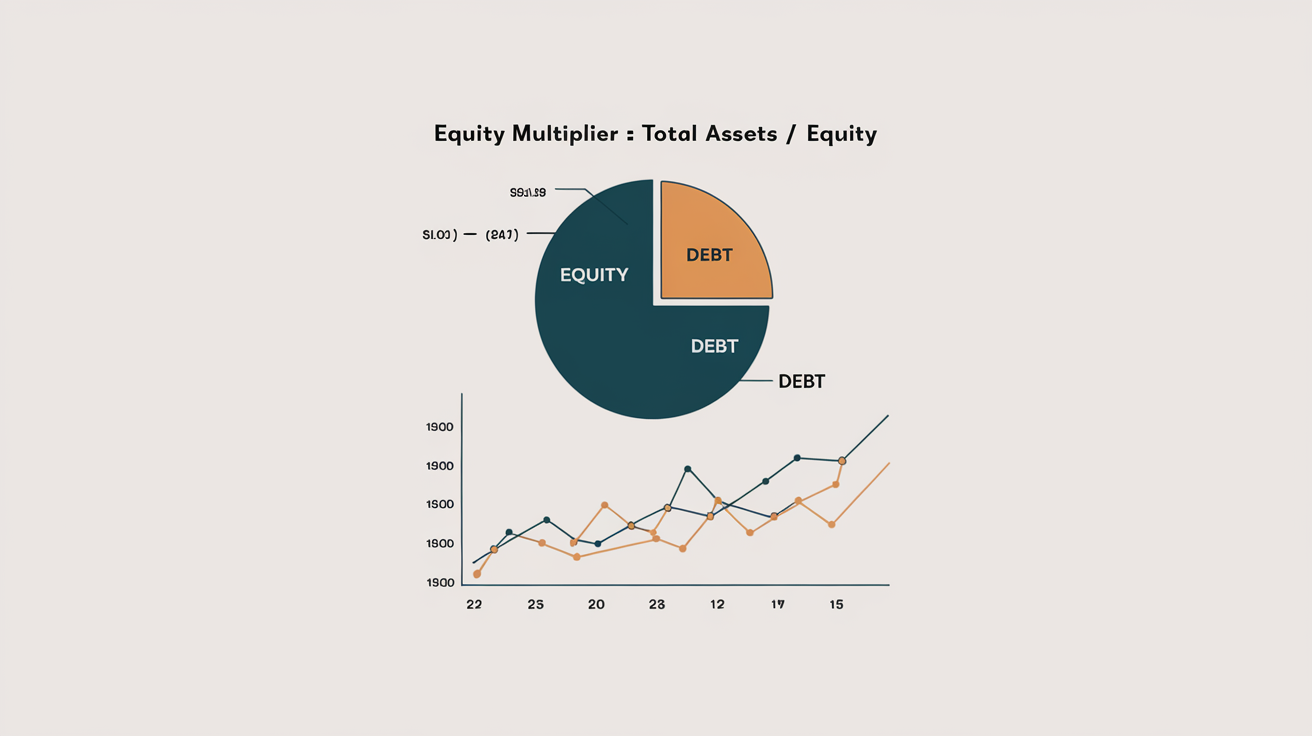
The equity multiplier is a financial ratio that measures a company’s financial leverage. It shows the proportion of a company’s assets that are financed by shareholders' equity compared to debt.
In simple terms, it tells you how much of the company's assets are funded by equity versus borrowed money. A higher equity multiplier means more debt is used, which can increase risk but also potential returns.
Formula to Calculate Equity Multiplier
The equity multiplier is calculated as:
- Equity Multiplier = Total Assets / Total Shareholders' Equity
This ratio indicates how many dollars of assets a company has for each dollar of equity.
Why is the Equity Multiplier Important?
The equity multiplier helps you understand a company’s leverage and risk profile. It is a key component of the DuPont analysis, which breaks down return on equity (ROE) into three parts.
Shows how much debt a company uses to finance assets.
Helps assess financial risk — higher leverage means higher risk.
Impacts return on equity by magnifying profits or losses.
Knowing the equity multiplier helps you evaluate if a company is over-leveraged or conservatively financed.
How to Interpret the Equity Multiplier
Interpreting the equity multiplier depends on the industry and company strategy. Generally:
- Low Equity Multiplier (close to 1):
Company uses mostly equity financing, less debt risk.
- High Equity Multiplier:
Company relies more on debt, which can increase returns but also risk.
For example, banks often have high equity multipliers due to their business model, while tech companies may have lower ratios.
Examples of Equity Multiplier
Imagine a company with $1 million in assets and $500,000 in equity:
Equity Multiplier = 1,000,000 / 500,000 = 2
This means the company has $2 in assets for every $1 of equity, implying $1 of debt.
If another company has $1 million in assets but $800,000 in equity, its equity multiplier is 1.25, showing less reliance on debt.
Equity Multiplier in DuPont Analysis
The DuPont formula breaks ROE into three parts: profit margin, asset turnover, and equity multiplier.
- ROE = Profit Margin × Asset Turnover × Equity Multiplier
The equity multiplier shows how leverage affects ROE. A higher multiplier can boost ROE if profits are strong but can hurt if profits decline.
Risks of a High Equity Multiplier
While leverage can increase returns, it also adds risk. A high equity multiplier means more debt, which can lead to:
Higher interest expenses reducing profits.
Greater vulnerability during economic downturns.
Potential difficulty in meeting debt obligations.
Investors should balance the benefits of leverage with the risks it brings.
How to Use Equity Multiplier in Investment Decisions
When evaluating stocks or companies, consider the equity multiplier alongside other ratios:
Compare with industry averages to understand typical leverage.
Use with debt ratios like debt-to-equity for a full picture.
Analyze trends over time to spot increasing or decreasing leverage.
This helps you make informed decisions about risk and potential returns.
Conclusion
The equity multiplier is a simple yet powerful tool to understand a company’s financial leverage. It reveals how much debt a company uses to finance its assets and impacts its risk and return profile.
By learning to calculate and interpret the equity multiplier, you can better assess companies’ financial health and make smarter investment choices. Always consider it with other financial metrics for a complete view.
FAQs
What does a high equity multiplier indicate?
A high equity multiplier indicates a company uses more debt relative to equity to finance its assets, increasing financial leverage and risk.
How is equity multiplier different from debt-to-equity ratio?
Equity multiplier measures total assets to equity, while debt-to-equity compares total debt to equity. Both assess leverage but from different angles.
Can a low equity multiplier be bad?
A low equity multiplier means less debt, which is safer but might limit growth potential if the company underutilizes leverage.
Is equity multiplier relevant for all industries?
Its relevance varies; capital-intensive industries often have higher multipliers, while others like tech may have lower ones due to less debt use.
How does equity multiplier affect return on equity?
The equity multiplier magnifies ROE by increasing the impact of assets financed through debt, boosting returns if profits are positive.