What is Internal Growth Rate in Corporate Finance?
Understand Internal Growth Rate in corporate finance, how it impacts business expansion, and strategies to optimize growth without external funding.
Introduction
Your business growth depends on many factors, but one key measure is the Internal Growth Rate (IGR). Understanding IGR helps you see how much your company can expand using only its own profits.
We’ll explore what IGR means in corporate finance, why it matters, and how you can use it to plan sustainable growth without relying on outside funding.
What is Internal Growth Rate?
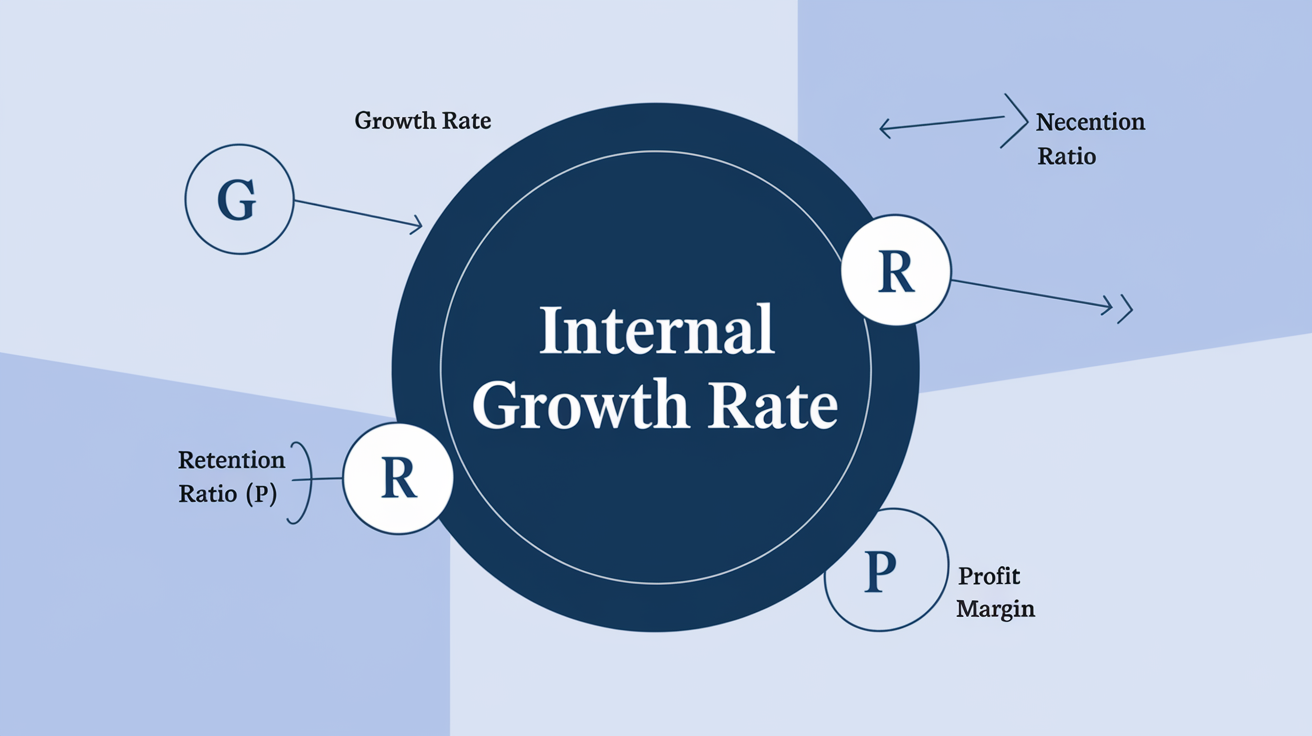
The Internal Growth Rate is the maximum rate at which a company can grow its sales, earnings, and assets using only retained earnings. It assumes no new external financing like debt or equity.
In simple terms, IGR shows how fast your business can expand by reinvesting profits back into operations.
It reflects the company’s ability to finance growth internally.
Helps assess financial health and operational efficiency.
Important for planning long-term growth strategies.
How is Internal Growth Rate Calculated?
The formula for Internal Growth Rate is:
IGR = Return on Assets (ROA) × Retention Ratio / [1 - (ROA × Retention Ratio)]
Where:
- Return on Assets (ROA)
measures how efficiently a company uses its assets to generate profit.
- Retention Ratio
is the proportion of net income retained in the business instead of paid as dividends.
This formula shows the growth rate achievable without external funds, based solely on asset returns and profit retention.
Why is Internal Growth Rate Important?
IGR is a vital metric for both management and investors. It provides insights into sustainable growth potential and financial stability.
- Financial Planning:
Helps set realistic growth targets based on internal resources.
- Investment Decisions:
Investors use IGR to evaluate if a company can grow without increasing debt.
- Dividend Policy:
Balances between paying dividends and retaining earnings for growth.
- Risk Management:
Avoids over-leveraging by relying on internal funds.
Factors Affecting Internal Growth Rate
Several factors influence a company’s IGR, including operational efficiency, profitability, and dividend policies.
- Return on Assets (ROA):
Higher ROA means more profit from assets, boosting IGR.
- Retention Ratio:
Retaining more earnings increases funds available for growth.
- Asset Turnover:
Efficient use of assets can improve ROA and growth.
- Profit Margins:
Higher margins increase net income, supporting growth.
Internal Growth Rate vs. Sustainable Growth Rate
While both relate to growth, IGR and Sustainable Growth Rate (SGR) differ in financing assumptions.
- Internal Growth Rate:
Growth using only retained earnings, no external debt or equity.
- Sustainable Growth Rate:
Growth possible while maintaining a target debt-equity ratio, including external financing.
Understanding both helps businesses plan growth with or without external funds.
How to Improve Your Internal Growth Rate
Boosting IGR requires improving profitability and retaining more earnings. Here are practical steps:
- Increase Asset Efficiency:
Use assets more effectively to raise ROA.
- Control Costs:
Reduce expenses to improve profit margins.
- Retain Earnings:
Balance dividend payouts to keep more profits for growth.
- Invest Wisely:
Reinvest profits in high-return projects.
Limitations of Internal Growth Rate
While IGR is useful, it has some limitations you should consider.
- Ignores External Financing:
Assumes no new debt or equity, which may limit growth potential.
- Static Assumptions:
ROA and retention ratio may change over time.
- Doesn't Account for Market Conditions:
External factors can affect growth beyond internal control.
Conclusion
Understanding Internal Growth Rate gives you a clear picture of how fast your company can grow using its own profits. It helps you plan growth realistically and avoid over-reliance on external funding.
By focusing on improving profitability and retaining earnings, you can enhance your IGR and build a financially stable business. Use IGR alongside other metrics to make informed decisions for sustainable corporate growth.
FAQs
What is the difference between Internal Growth Rate and Sustainable Growth Rate?
IGR measures growth using only retained earnings, while SGR includes external financing like debt, allowing for higher growth.
How does retention ratio affect Internal Growth Rate?
A higher retention ratio means more profits are reinvested, increasing the funds available for growth and thus raising the IGR.
Can a company grow faster than its Internal Growth Rate?
Yes, by using external financing such as debt or equity, a company can exceed its IGR, but this increases financial risk.
Why is Return on Assets important for Internal Growth Rate?
ROA shows how efficiently assets generate profit; higher ROA means more internal funds for growth, boosting the IGR.
Is Internal Growth Rate useful for startups?
IGR is less relevant for startups since they often rely on external funding; it’s more useful for established companies focusing on organic growth.