What is Exponential Growth In Economics?
Explore exponential growth in economics, its impact on markets, and how understanding it can guide smarter financial decisions.

Introduction to Exponential Growth in Economics
Understanding exponential growth is key to grasping how economies expand over time. You might have heard about this concept in finance or business, but what does it really mean in economics?
In simple terms, exponential growth happens when something increases at a consistent percentage rate, causing the total to grow faster as time passes. This article will help you understand how exponential growth works in economics and why it matters for your investments and financial planning.
What is Exponential Growth?
Exponential growth describes a process where the rate of increase is proportional to the current size. This means the bigger the quantity gets, the faster it grows.
Growth happens in percentage terms, not fixed amounts.
The total amount doubles at regular intervals if the growth rate stays constant.
It contrasts with linear growth, where increases happen by the same fixed amount each period.
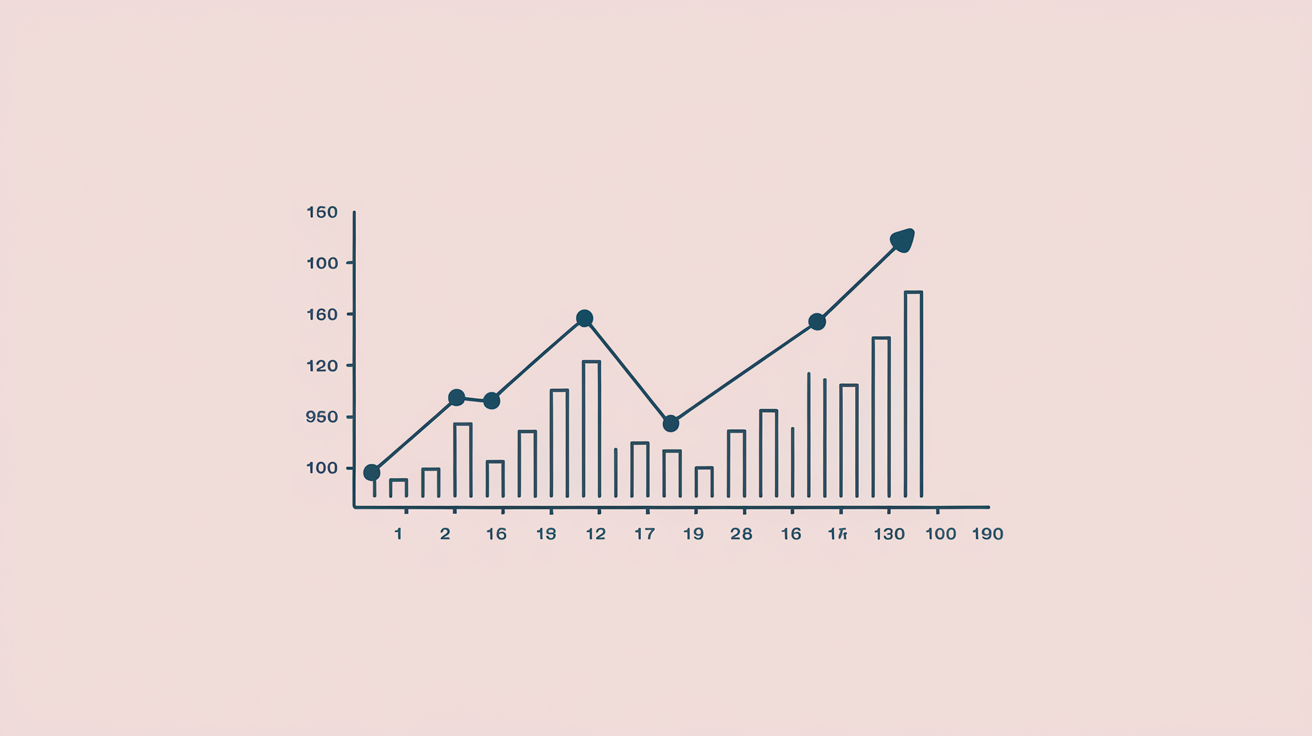
For example, if an economy grows 5% annually, its size will double roughly every 14 years. This compounding effect is what makes exponential growth powerful.
How Exponential Growth Manifests in Economics
In economics, exponential growth appears in various areas, including:
- GDP Growth:
When a country's economy grows at a steady percentage rate, its GDP expands exponentially over time.
- Population Growth:
Population increases can follow exponential patterns, impacting labor markets and demand.
- Investment Returns:
Compound interest causes investments to grow exponentially, rewarding long-term saving.
- Technological Advancement:
Innovations often build on previous knowledge, accelerating economic growth exponentially.
Recognizing these patterns helps economists and investors predict future trends and make informed decisions.
Mathematics Behind Exponential Growth
The formula for exponential growth is:
P(t) = P_0 × (1 + r)^t
Where:
- P(t)
is the amount at time
t.
- P_0
is the initial amount.
- r
is the growth rate per period (expressed as a decimal).
- t
is the number of periods.
This formula shows how the quantity grows by multiplying the initial amount by the growth factor raised to the power of time.
For example, if an investment of $1,000 grows at 7% annually, after 10 years it will be:
$1,000 × (1 + 0.07)^10 = $1,967.15
This nearly doubles the original amount, illustrating exponential growth.
Why Exponential Growth Matters in Economics
Exponential growth is important because it explains how economies and investments can expand rapidly over time. Here’s why it matters:
- Long-Term Wealth Building:
Understanding exponential growth helps you appreciate the power of compound interest in growing your savings.
- Policy Planning:
Governments use growth models to forecast economic development and plan budgets.
- Resource Management:
Exponential population or consumption growth can strain resources, requiring sustainable policies.
- Business Strategy:
Companies leverage exponential growth in technology and markets to scale operations quickly.
Ignoring exponential growth can lead to underestimating future changes and risks.
Examples of Exponential Growth in Real Economies
Several real-world examples show exponential growth in action:
- China’s GDP Growth:
Over the past decades, China’s economy grew at high percentage rates, leading to a massive increase in GDP and global economic influence.
- Stock Market Returns:
The S&P 500 index has historically grown at an average of about 7-10% annually, compounding wealth for long-term investors.
- Technology Adoption:
The rapid spread of smartphones and internet access followed exponential growth patterns, transforming economies worldwide.
These examples highlight how exponential growth shapes economic landscapes.
Limitations and Challenges of Exponential Growth
While exponential growth can be powerful, it has limits and challenges:
- Resource Constraints:
Natural resources and environmental limits can slow or halt growth.
- Market Saturation:
Economies or businesses may reach points where growth rates decline.
- Economic Cycles:
Recessions and crises can disrupt growth patterns temporarily or permanently.
- Population Pressures:
Rapid population growth can strain infrastructure and social services.
Understanding these factors helps you recognize when exponential growth might slow or reverse.
How to Use Exponential Growth Knowledge in Your Finances
You can apply exponential growth principles to improve your financial decisions:
- Start Investing Early:
The longer your money compounds, the greater the growth.
- Reinvest Returns:
Avoid withdrawing earnings to maximize compounding effects.
- Plan for Inflation:
Exponential growth in prices means your investments should outpace inflation.
- Monitor Growth Rates:
Be aware of changing economic conditions that affect growth assumptions.
These steps help you harness exponential growth for wealth building.
Conclusion
Exponential growth is a fundamental concept in economics that explains how economies, populations, and investments expand over time. By growing at a consistent percentage rate, quantities can double and multiply rapidly, creating powerful effects.
Understanding exponential growth helps you make smarter financial choices, plan for the future, and appreciate the forces shaping economic change. Whether you're investing or analyzing markets, this knowledge is essential for long-term success.
What is exponential growth in simple terms?
Exponential growth means something increases by a fixed percentage over time, causing it to grow faster as it gets bigger.
How does exponential growth differ from linear growth?
Linear growth adds a fixed amount each period, while exponential growth increases by a fixed percentage, leading to faster overall growth.
Why is exponential growth important for investors?
It shows how compound interest helps investments grow faster over time, rewarding patience and long-term planning.
Can exponential growth continue forever in economics?
No, factors like resource limits and market saturation usually slow or stop exponential growth eventually.
How can I apply exponential growth to my personal finances?
Start investing early, reinvest returns, and plan for inflation to benefit from compound growth over time.