What is J-Curve Effect In International Economics
Explore the J-Curve effect in international economics, its impact on trade balances, and how currency depreciation influences a country's economy over time.
Introduction to the J-Curve Effect
If you’re curious about how currency changes affect a country's trade balance, the J-Curve effect is a key concept to understand. It explains why a nation’s trade deficit might initially worsen after a currency depreciation before improving over time.
We’ll explore what the J-Curve effect means in international economics, why it happens, and how it influences trade and economic policy decisions. This knowledge can help you better grasp global trade dynamics and currency impacts.
What is the J-Curve Effect?
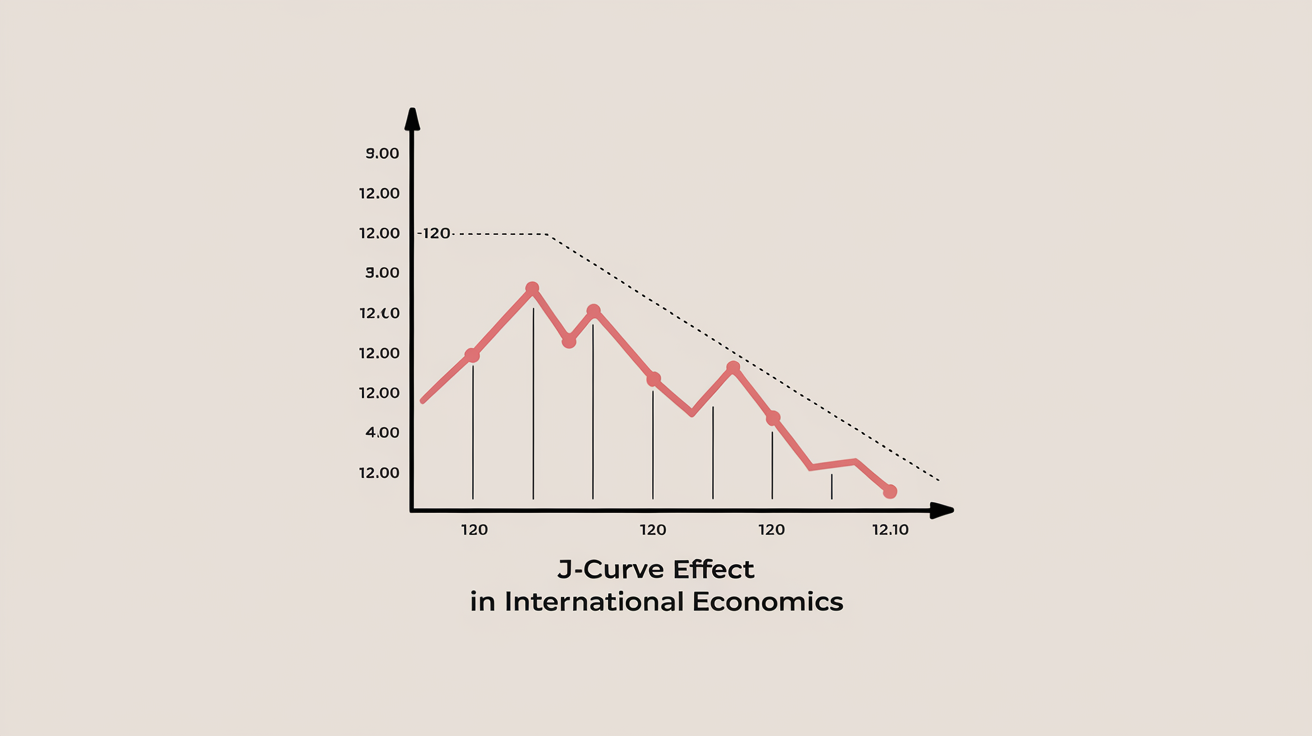
The J-Curve effect describes the pattern of a country’s trade balance following a depreciation or devaluation of its currency. Initially, the trade balance worsens, then improves, forming a curve resembling the letter 'J' when graphed over time.
This happens because prices and quantities adjust at different speeds after a currency change. The immediate effect often shows a larger import bill and unchanged export volume, leading to a bigger deficit before trade improves.
How the J-Curve Works
- Currency Depreciation:
When a country’s currency loses value, its exports become cheaper for foreign buyers, and imports become more expensive for domestic consumers.
- Short-Term Impact:
Import costs rise immediately, but export volumes take time to increase because contracts and orders are often fixed in the short run.
- Long-Term Impact:
Over time, exports grow as foreign demand responds to lower prices, and imports decline as domestic consumers switch to local goods, improving the trade balance.
Why Does the J-Curve Effect Occur?
The J-Curve effect arises due to differences in price elasticity and timing in international trade. Here are the main reasons:
- Contractual Delays:
Export and import contracts are often set in advance, so volumes don’t adjust immediately after currency changes.
- Price Inelasticity:
In the short term, demand for imports and exports doesn’t change much with price shifts, causing the trade deficit to worsen.
- Adjustment Period:
Over months, consumers and businesses adjust their buying habits, increasing exports and reducing imports.
Examples of the J-Curve Effect in Action
Several countries have experienced the J-Curve effect after currency depreciation. Here are some examples:
- United Kingdom (1992):
After the pound depreciated post-Black Wednesday, the trade deficit initially worsened before improving as exports became more competitive.
- Japan (1990s):
The yen’s depreciation led to a delayed improvement in Japan’s trade balance, illustrating the typical J-Curve pattern.
- Emerging Markets:
Many emerging economies see the J-Curve effect after currency shocks, as import costs rise before export volumes respond.
Implications for Policymakers and Investors
Understanding the J-Curve effect helps policymakers and investors anticipate trade balance changes after currency moves.
- Policy Timing:
Governments should expect short-term trade deficits after depreciation and avoid premature judgments about policy failure.
- Exchange Rate Management:
Central banks can use the J-Curve concept to time interventions and communicate expected trade balance trajectories.
- Investment Decisions:
Investors can anticipate currency impacts on export-oriented companies and sectors sensitive to trade balance shifts.
Limitations of the J-Curve Effect
While the J-Curve is a useful model, it has some limitations:
- Not Universal:
Some countries may not experience a clear J-Curve due to structural factors or trade composition.
- Elasticity Variations:
The speed and magnitude of adjustment depend on how sensitive trade volumes are to price changes.
- External Factors:
Global demand, trade policies, and supply chain disruptions can alter the expected J-Curve pattern.
Conclusion
The J-Curve effect is a vital concept in international economics that explains why a country’s trade balance may initially worsen after currency depreciation before improving. It highlights the timing differences between price changes and trade volume adjustments.
By understanding the J-Curve, you can better interpret trade data, anticipate economic shifts, and make informed decisions about currency movements and their impact on global trade dynamics.
What is the J-Curve effect in simple terms?
It’s the pattern where a country’s trade balance first gets worse after its currency drops in value, then improves over time as exports grow and imports shrink.
Why does the trade deficit worsen initially after currency depreciation?
Because import prices rise immediately while export volumes take time to increase, leading to a short-term increase in the trade deficit.
How long does it take for the J-Curve effect to show improvement?
The improvement usually happens over several months as trade volumes adjust, but timing varies by country and economic conditions.
Can all countries experience the J-Curve effect?
No, some countries may not show a clear J-Curve due to differences in trade structure, price elasticity, or external economic factors.
How can investors use knowledge of the J-Curve effect?
Investors can anticipate currency impacts on export and import sectors, helping them make better decisions about international investments and currency risks.