What is Lorenz Curve in Inequality Economics?
Explore the Lorenz Curve in inequality economics, its role in measuring income distribution, and how it helps understand economic disparities.
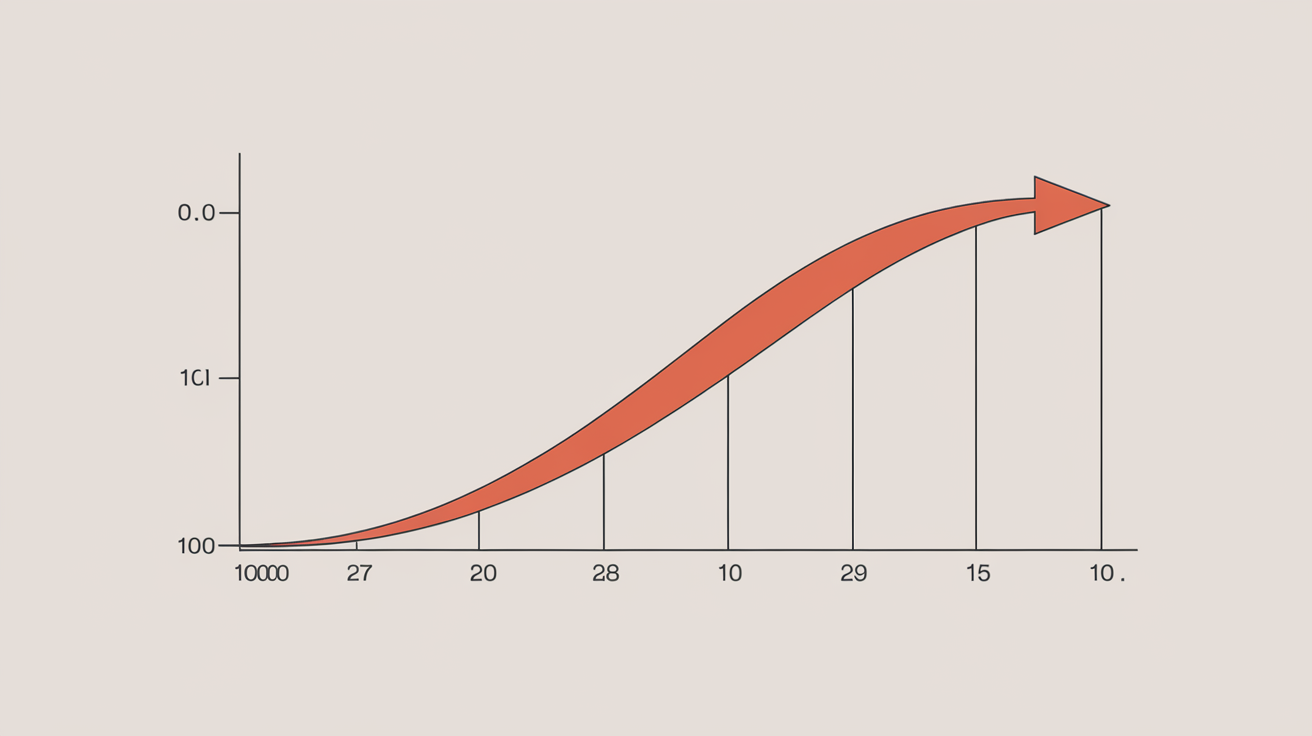
Introduction to the Lorenz Curve
Understanding economic inequality is crucial for shaping fair policies. The Lorenz Curve is a powerful tool that helps you visualize income or wealth distribution within a population. It shows how evenly or unevenly resources are shared among people.
In this article, we’ll explore what the Lorenz Curve is, how it works, and why it matters in inequality economics. You’ll learn to interpret this curve and see its practical applications in measuring economic disparities.
What is the Lorenz Curve?
The Lorenz Curve is a graphical representation of income or wealth distribution. It plots the cumulative percentage of total income earned against the cumulative percentage of the population, starting with the poorest.
This curve helps you see how much of the total income is held by the bottom x% of people. If income were perfectly equal, the curve would be a straight diagonal line. The more the curve bows away from this line, the greater the inequality.
Horizontal axis: cumulative population percentage (from poorest to richest)
Vertical axis: cumulative income or wealth percentage
Line of equality: a 45-degree line representing perfect equality
Lorenz Curve: lies below the line of equality, showing actual distribution
How to Interpret the Lorenz Curve
Reading the Lorenz Curve is straightforward once you understand its components. The gap between the curve and the line of equality indicates the level of inequality.
For example, if the bottom 50% of the population earns only 20% of the total income, the curve will be far below the equality line at the 50% mark.
Closer the curve to the equality line, the more equal the income distribution
Greater the bow, the higher the inequality
The area between the curve and the equality line is used to calculate the Gini coefficient
Relation Between Lorenz Curve and Gini Coefficient
The Gini coefficient is a numerical measure of inequality derived from the Lorenz Curve. It quantifies the area between the Lorenz Curve and the line of equality.
This coefficient ranges from 0 to 1, where 0 means perfect equality and 1 means maximum inequality. It’s widely used by economists and policymakers to compare inequality across countries or over time.
Gini coefficient = Area between Lorenz Curve and equality line ÷ Total area under equality line
Lower Gini values indicate more equal societies
Higher Gini values point to greater income disparities
Applications of the Lorenz Curve in Economics
The Lorenz Curve is more than just a graph; it’s a practical tool for economic analysis and policy design.
- Measuring income inequality:
Helps governments identify income gaps and target social programs.
- Comparing countries:
Allows comparison of inequality levels internationally.
- Tracking changes over time:
Shows how policies or economic shifts affect income distribution.
- Wealth distribution analysis:
Extends beyond income to study wealth concentration.
Limitations of the Lorenz Curve
While useful, the Lorenz Curve has some limitations you should be aware of.
Does not show where in the distribution inequality occurs (top, middle, or bottom)
Cannot capture non-income factors affecting well-being
Requires accurate data, which can be hard to obtain in some regions
Does not reflect changes in population size or demographic shifts
Examples of Lorenz Curve in Real-World Contexts
Let’s look at some practical examples to understand how the Lorenz Curve works.
- Country A:
The bottom 40% holds 25% of income, curve close to equality line, indicating low inequality.
- Country B:
The bottom 40% holds only 10% of income, curve bows sharply, showing high inequality.
- Policy impact:
After tax reforms, Country B’s Lorenz Curve shifts closer to equality, reflecting improved income distribution.
How You Can Use the Lorenz Curve
If you’re analyzing economic data or interested in social justice, the Lorenz Curve offers valuable insights.
Use it to visualize income distribution in your community or country
Compare inequality before and after policy changes
Combine it with other indicators like poverty rates for a fuller picture
Understand the impact of economic growth on different population groups
Conclusion
The Lorenz Curve is a fundamental concept in inequality economics. It provides a clear picture of how income or wealth is distributed across a population.
By understanding this curve, you can better grasp economic disparities and support informed decisions to promote fairness and growth. Whether you’re a student, policymaker, or investor, the Lorenz Curve is a valuable tool to add to your financial knowledge.
What is the Lorenz Curve used for?
The Lorenz Curve is used to graphically represent income or wealth distribution, helping measure economic inequality within a population.
How does the Lorenz Curve show inequality?
It shows inequality by the gap between the curve and the line of equality; a larger gap means greater inequality.
What does a perfectly equal Lorenz Curve look like?
It is a straight 45-degree line where every percentage of the population earns the same percentage of total income.
How is the Gini coefficient related to the Lorenz Curve?
The Gini coefficient quantifies inequality by measuring the area between the Lorenz Curve and the line of equality.
Can the Lorenz Curve measure wealth distribution?
Yes, the Lorenz Curve can be used to analyze wealth distribution, not just income, to study economic disparities.