What is Law of Diminishing Marginal Returns?
Understand the Law of Diminishing Marginal Returns, its impact on production, and how it shapes business decisions with clear examples and insights.
Introduction
When running a business or managing resources, you often hear about the Law of Diminishing Marginal Returns. This concept explains how adding more of one input, like labor or capital, affects output. Understanding this law helps you make smarter decisions about resource allocation and productivity.
In this article, we’ll break down what the Law of Diminishing Marginal Returns means, why it matters, and how it applies in real-world scenarios. You’ll learn how to spot it and use it to improve your business strategies.
What is the Law of Diminishing Marginal Returns?
The Law of Diminishing Marginal Returns states that when you increase one input in production while keeping other inputs constant, the additional output from each new unit of that input will eventually decrease. In simple terms, adding more workers or machines will boost production at first, but after a certain point, each extra unit adds less and less.
This law is fundamental in economics and helps explain why production doesn't increase indefinitely just by adding more resources.
Key Points of the Law
It applies when at least one input is fixed.
Initially, output increases at an increasing rate.
After a certain point, output increases at a decreasing rate.
Eventually, adding more input may not increase output at all.
Why Does the Law Occur?
The law happens because resources are limited and cannot be perfectly combined. For example, if you have a fixed number of machines, adding more workers will help up to a point. But too many workers crowd the machines, causing inefficiencies.
Other reasons include:
Limited space or equipment.
Coordination problems among workers.
Overuse of fixed inputs leading to wear and tear.
Examples of the Law of Diminishing Marginal Returns
Let’s look at some practical examples to understand this law better.
Example 1: Farming
A farmer has a fixed amount of land. Adding more fertilizer or workers initially increases crop yield significantly. But after some point, extra fertilizer or labor adds less to the harvest because the land can only produce so much.
Example 2: Manufacturing
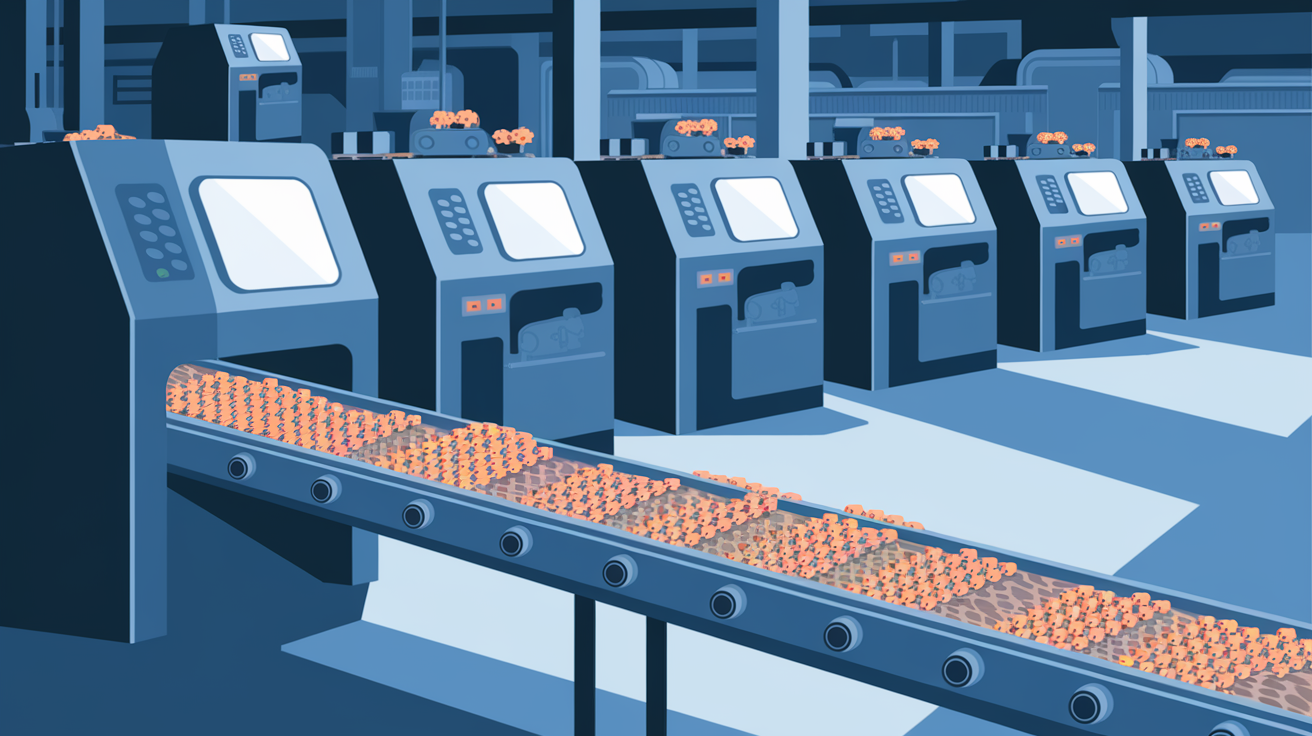
In a factory with limited machines, hiring more workers speeds up production at first. But too many workers cause congestion, reducing the efficiency of each additional worker.
How Businesses Use This Law
Understanding this law helps businesses optimize production and control costs. Here’s how:
- Resource Allocation:
Avoid over-investing in one input that won’t yield proportional returns.
- Cost Management:
Identify the point where adding more resources becomes inefficient.
- Production Planning:
Balance inputs to maximize output without waste.
Limitations of the Law
While useful, the law has some limits:
It assumes technology and other inputs remain constant.
It doesn’t account for long-term improvements like new technology.
Real-world factors like market demand or labor skills can affect outcomes.
Conclusion
The Law of Diminishing Marginal Returns is a key economic principle that explains why increasing one input in production eventually leads to smaller gains. Knowing this helps you manage resources wisely and avoid inefficiencies.
By recognizing when diminishing returns set in, you can make better decisions about hiring, investing, and scaling your operations. This understanding is essential for sustainable growth and profitability.
FAQs
What is an example of diminishing marginal returns?
Adding more workers to a fixed number of machines increases output at first, but after a point, each new worker adds less because of limited equipment.
Does the law apply to all industries?
Yes, it generally applies to any production process where at least one input is fixed, though the specific point of diminishing returns varies.
Can technology affect diminishing returns?
Yes, improvements in technology can shift or delay diminishing returns by making inputs more efficient.
Is diminishing marginal returns the same as decreasing total returns?
No, diminishing marginal returns means each additional input adds less output, but total output can still increase.
How can businesses avoid diminishing returns?
By balancing inputs, investing in technology, and monitoring productivity to avoid overusing any single resource.