What is Recovery Rate in Finance?
Understand the recovery rate in finance, its importance in lending, investing, and risk management, with clear examples and practical insights.
Introduction to Recovery Rate in Finance
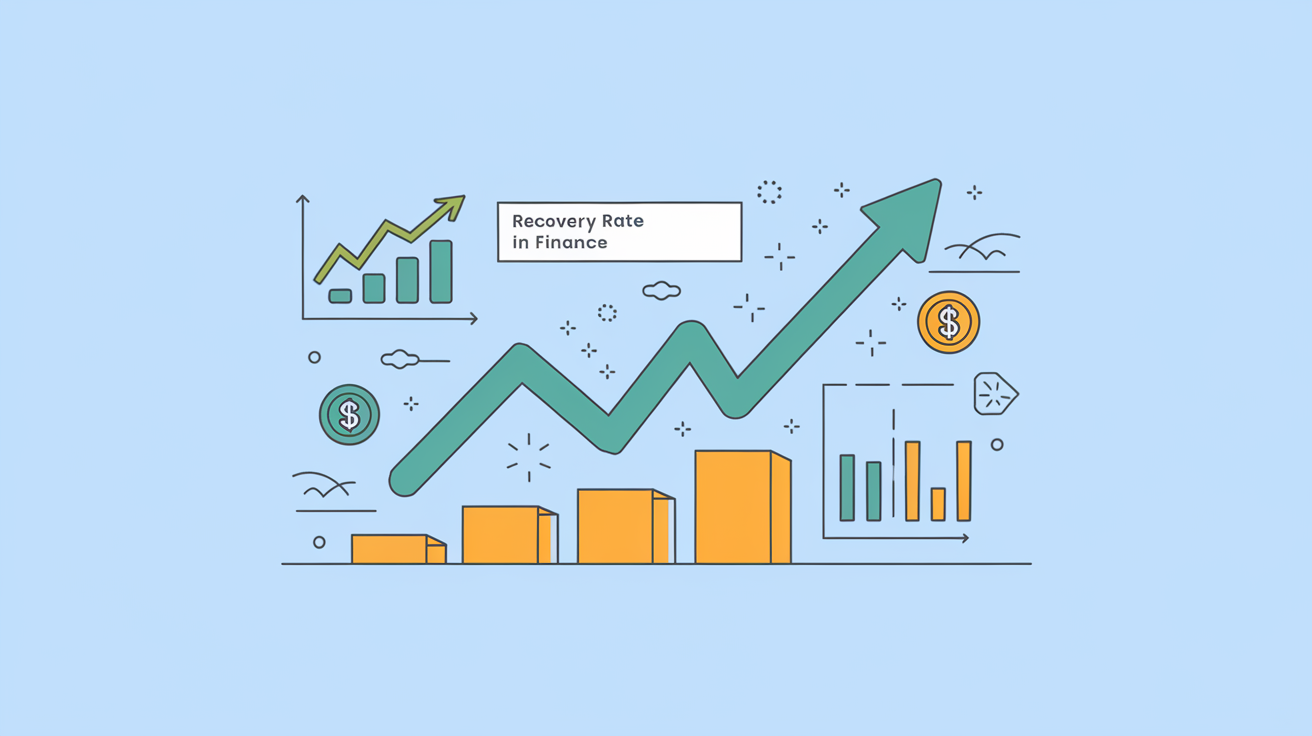
When you lend money or invest in bonds, you want to know how much you can expect to get back if things go wrong. That’s where the recovery rate comes in. It tells you the percentage of your investment you might recover after a borrower defaults.
Understanding recovery rates helps you manage risk better and make smarter financial decisions. In this article, we’ll explore what recovery rate means, why it matters, and how it affects lending and investing.
What Is Recovery Rate?
The recovery rate is the amount recovered from a defaulted loan or bond expressed as a percentage of the total amount owed. For example, if a borrower defaults on a $100,000 loan but you recover $40,000 through asset sales or restructuring, the recovery rate is 40%.
This metric is crucial for lenders, investors, and credit analysts because it shows the potential loss severity in case of default.
How Recovery Rate Is Calculated
Calculating recovery rate is straightforward:
Identify the total exposure at default (EAD), which is the amount owed.
Determine the amount recovered after default, including collateral liquidation or repayments.
Use the formula: Recovery Rate = (Amount Recovered / Amount Owed) × 100%
For example, if you lent $50,000 and recovered $20,000, the recovery rate is (20,000 / 50,000) × 100% = 40%.
Why Is Recovery Rate Important?
Recovery rate helps you understand the real risk of lending or investing. It complements the probability of default (PD) to give a full picture of potential losses.
- Risk Assessment:
Knowing recovery rates helps banks and investors estimate expected losses more accurately.
- Pricing Loans and Bonds:
Higher expected recovery rates can justify lower interest rates, while lower recovery rates require higher returns.
- Regulatory Compliance:
Financial institutions use recovery rates to meet capital requirements under regulations like Basel III.
Factors Affecting Recovery Rate
Recovery rates vary widely depending on several factors. Here are the main ones:
- Type of Debt:
Secured loans usually have higher recovery rates than unsecured loans because of collateral.
- Industry Sector:
Some industries have better asset values and liquidation prospects than others.
- Economic Conditions:
During recessions, recovery rates tend to drop due to lower asset prices.
- Legal Environment:
Jurisdictions with strong creditor rights often see higher recovery rates.
- Loan Seniority:
Senior debt holders get paid before subordinated debt holders, affecting recovery outcomes.
Recovery Rate in Different Financial Contexts
In Corporate Lending
When companies borrow, lenders assess recovery rates to price loans and set terms. Secured loans backed by assets like property or equipment usually have recovery rates between 40% and 60%. Unsecured loans may have rates below 20%.
In Bond Investing
Bond investors use recovery rates to estimate losses if the issuer defaults. High-yield bonds often have lower recovery rates due to higher risk. Investment-grade bonds typically recover a larger portion.
In Credit Derivatives
Recovery rates are key inputs in pricing credit default swaps (CDS). The expected recovery affects the CDS premium you pay to protect against default.
How to Use Recovery Rate in Your Financial Decisions
Here’s how you can apply recovery rate knowledge:
- Evaluate Risk:
Combine recovery rate with default probability to estimate expected loss.
- Compare Investments:
Use recovery rates to compare bonds or loans with similar risk profiles.
- Negotiate Terms:
If recovery rates are low, negotiate higher interest rates or collateral requirements.
- Plan for Defaults:
Incorporate recovery rates in stress tests and contingency planning.
Examples of Recovery Rate Scenarios
Consider a bank that lent $1 million to a company. If the company defaults and the bank recovers $600,000 by selling collateral, the recovery rate is 60%. This means the bank’s loss is $400,000.
In contrast, if the loan was unsecured and the bank recovered only $100,000, the recovery rate is 10%, indicating a much higher loss.
Limitations of Recovery Rate
While useful, recovery rates have some limitations:
- Estimates Vary:
Recovery can differ based on timing, legal costs, and market conditions.
- Historical Bias:
Past recovery rates may not predict future outcomes, especially in volatile markets.
- Complex Calculations:
Determining exact recoveries can be complicated by restructuring or multiple creditors.
Conclusion
Recovery rate is a vital concept in finance that helps you understand how much money you can expect back if a borrower defaults. It works alongside default probability to give a clear picture of risk.
By knowing recovery rates, you can better assess loans, bonds, and credit risks. This knowledge empowers you to make smarter investment choices, negotiate better terms, and plan for potential losses effectively.
FAQs
What is a good recovery rate in finance?
A good recovery rate depends on the debt type but typically ranges from 40% to 60% for secured loans. Higher rates mean less loss after default.
How does recovery rate affect loan interest rates?
Lower recovery rates increase expected losses, so lenders charge higher interest rates to compensate for the risk.
Is recovery rate the same as default rate?
No, recovery rate measures how much is recovered after default, while default rate measures the chance a borrower will fail to pay.
Can recovery rates change over time?
Yes, recovery rates fluctuate with economic conditions, legal changes, and market dynamics affecting asset values.
How do recovery rates impact credit default swaps?
Recovery rates influence CDS pricing by determining expected payout amounts if the reference entity defaults, affecting premiums paid.