What is Nominal GDP in Macroeconomics?
Understand nominal GDP in macroeconomics, its calculation, differences from real GDP, and why it matters for economic analysis.
Introduction to Nominal GDP
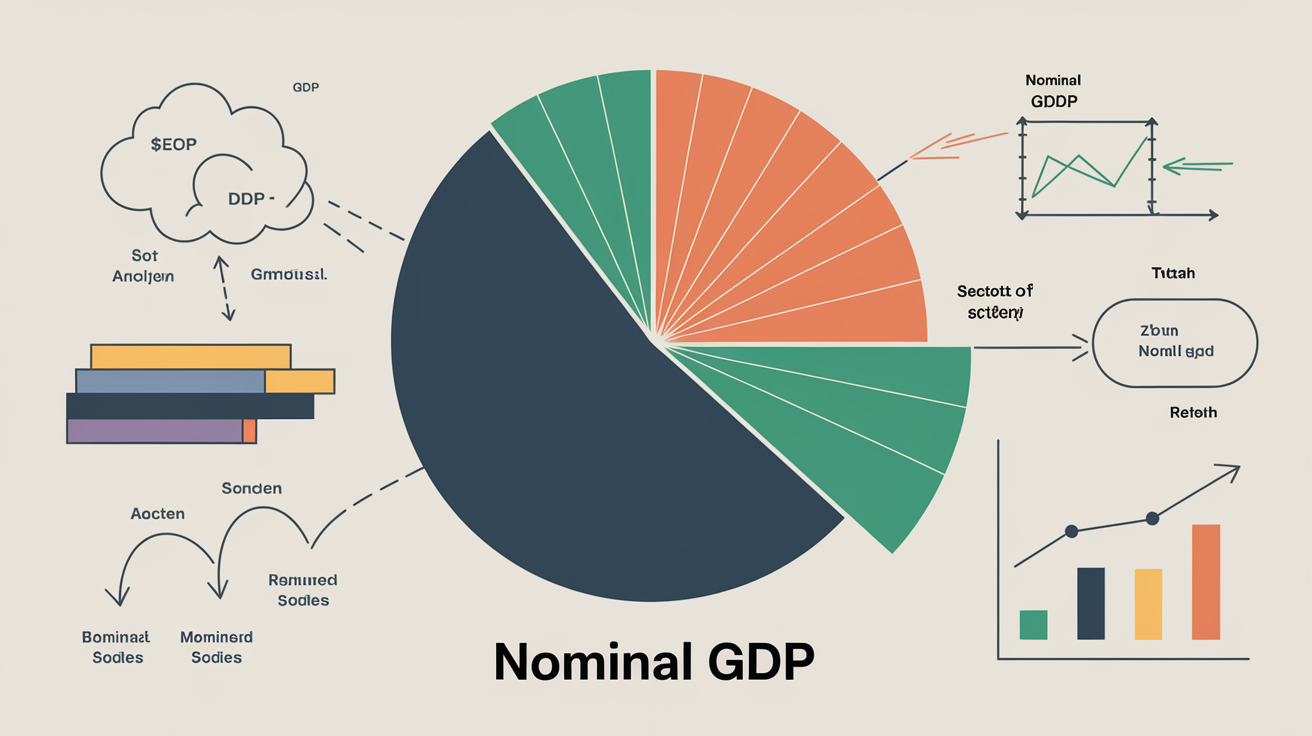
When you hear about a country's economic size, nominal GDP is often the starting point. It measures the total value of all goods and services produced using current prices. This means it reflects both the quantity of output and the prices at which goods and services are sold.
Understanding nominal GDP helps you grasp how economies grow and change over time. It’s a fundamental concept in macroeconomics that shows the market value of production without adjusting for inflation.
What Exactly is Nominal GDP?
Nominal GDP is the gross domestic product calculated using current market prices during the year the goods and services are produced. It sums up the value of everything produced in the economy at those prices.
Includes all final goods and services produced within a country’s borders.
Uses prices that prevail in the year of measurement, so inflation affects it.
Does not adjust for changes in price level or inflation.
Because it uses current prices, nominal GDP can increase simply due to rising prices, even if the actual output stays the same.
How is Nominal GDP Calculated?
The calculation is straightforward. You multiply the quantity of each good or service produced by its current price, then add all these values together.
Nominal GDP = Σ (Price of each good × Quantity produced)
Includes goods like cars, food, and services like healthcare or education.
Reflects both changes in production and price levels.
This method captures the economy’s size in monetary terms but can be misleading if prices change significantly.
Nominal GDP vs. Real GDP
It’s important to know how nominal GDP differs from real GDP. Real GDP adjusts for inflation, showing the true growth in output.
- Nominal GDP:
Measured at current prices, affected by inflation.
- Real GDP:
Measured at constant prices, removes inflation effects.
Real GDP gives a clearer picture of economic growth by isolating quantity changes.
For example, if nominal GDP rises by 5% but inflation is 3%, real GDP growth is only about 2%.
Why Does Nominal GDP Matter?
Nominal GDP is useful for several reasons:
It shows the economy’s size in current market terms.
Helps compare the economic output year by year in monetary terms.
Used in calculating other economic indicators like GDP deflator and national income.
Important for fiscal policy and budgeting since government revenues depend on current prices.
However, relying solely on nominal GDP can be misleading when inflation is high.
Limitations of Nominal GDP
While nominal GDP is easy to calculate, it has some drawbacks:
Does not account for inflation or deflation, which can distort growth figures.
Price changes can make the economy look bigger or smaller without real output changes.
Comparisons over time can be inaccurate without adjusting for price level changes.
Can be influenced by short-term price shocks, like oil price spikes.
For these reasons, economists often prefer real GDP for measuring economic performance over time.
How Economists Use Nominal GDP
Despite its limitations, nominal GDP plays a key role in economic analysis:
Calculating the GDP deflator, which measures inflation.
Assessing the size of the economy in current dollar terms for international comparisons.
Helping governments plan budgets based on current price levels.
Tracking short-term economic changes where price effects are relevant.
It’s a starting point for understanding economic health before adjusting for inflation.
Conclusion
Nominal GDP is a vital macroeconomic measure that reflects the total market value of goods and services produced in an economy at current prices. It helps you see the economy’s size in monetary terms but doesn’t separate price changes from output changes.
To get a full picture of economic growth, you need to consider real GDP alongside nominal GDP. Together, they provide insights into both price movements and actual production changes, helping you understand the economy’s true performance.
What is the difference between nominal GDP and real GDP?
Nominal GDP uses current prices and includes inflation effects, while real GDP adjusts for inflation to show true output growth.
Why can nominal GDP be misleading?
Because it doesn’t adjust for inflation, nominal GDP can rise simply due to higher prices, not increased production.
How is nominal GDP calculated?
By multiplying the quantity of all goods and services produced by their current prices and summing the results.
What role does nominal GDP play in economic policy?
It helps governments estimate revenue and plan budgets based on current market values.
Can nominal GDP be used to compare economies internationally?
Yes, but comparisons should consider exchange rates and inflation differences for accuracy.