What is Okun’s Law? Explained Simply
Understand Okun's Law, its economic significance, and how it links unemployment changes to GDP growth in simple terms.
Introduction to Okun’s Law
Have you ever wondered how changes in unemployment affect a country’s economic growth? Okun’s Law helps explain this connection. It’s a simple but powerful economic rule that shows the relationship between unemployment rates and GDP growth.
In this article, we’ll explore what Okun’s Law means, why it matters, and how it helps economists and policymakers understand the economy better.
What is Okun’s Law?
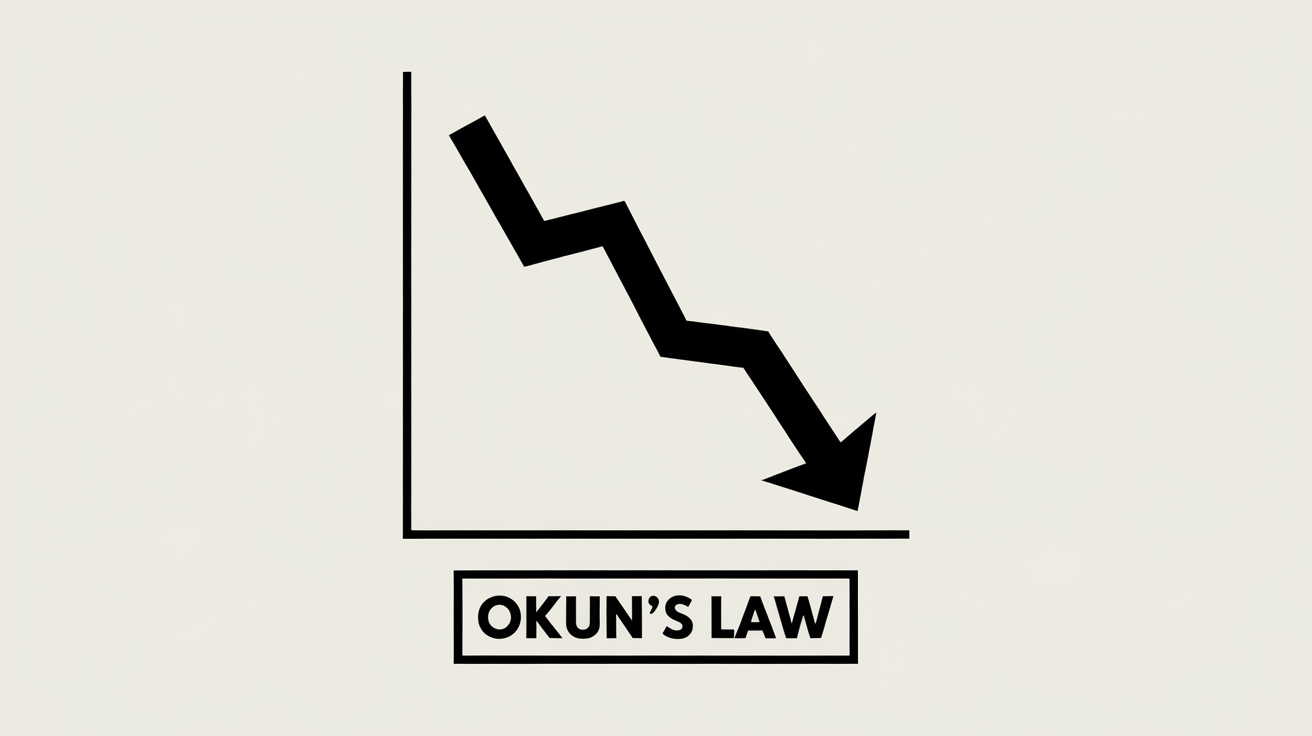
Okun’s Law is an observed relationship between unemployment and economic output. It states that when unemployment falls by 1%, a country’s GDP tends to grow by about 2% to 3%. Conversely, if unemployment rises, GDP usually shrinks.
This law was first identified by economist Arthur Okun in the 1960s. It’s not a strict rule but a useful guideline showing how jobs and economic growth move together.
Key Points About Okun’s Law
It links changes in unemployment rate to changes in real GDP growth.
Typically, a 1% drop in unemployment means roughly 2% to 3% GDP growth.
The exact numbers can vary by country and time period.
It helps predict economic performance based on labor market data.
How Does Okun’s Law Work?
Okun’s Law works by measuring the gap between actual GDP and potential GDP — the economy’s maximum sustainable output. When unemployment decreases, more people work, producing more goods and services, which boosts GDP.
Economists use this relationship to estimate how much economic growth is needed to reduce unemployment or how rising unemployment might slow the economy.
Formula Behind Okun’s Law
The basic formula is:
Percentage change in GDP = k – c × change in unemployment rate
Here, k is the average growth rate of potential GDP, and c is Okun’s coefficient, usually around 2 or 3.
Why is Okun’s Law Important?
Okun’s Law is important because it helps governments and businesses understand the link between jobs and economic health. It provides a simple way to estimate how changes in unemployment affect overall economic growth.
This insight guides policy decisions like stimulus spending, interest rate adjustments, and job creation programs.
Practical Uses of Okun’s Law
Forecasting GDP growth based on unemployment trends.
Designing economic policies to reduce unemployment.
Analyzing the impact of recessions or booms on jobs and output.
Helping investors understand economic cycles.
Limitations of Okun’s Law
While useful, Okun’s Law has limitations. It is an empirical observation, not a strict economic law. The relationship between unemployment and GDP can change over time due to:
Changes in labor productivity.
Shifts in workforce participation.
Structural changes in the economy.
Different measurement methods across countries.
Therefore, Okun’s Law should be used as a guideline, not a precise predictor.
Examples of Okun’s Law in Action
During economic recessions, unemployment tends to rise, and GDP falls. For instance, if unemployment increases by 2%, Okun’s Law suggests GDP might drop by about 4% to 6%. This helps policymakers understand the severity of downturns.
Conversely, in a strong economy, a 1% drop in unemployment could mean a 2% to 3% rise in GDP, signaling robust growth.
Conclusion
Okun’s Law offers a clear way to see how unemployment and economic growth are connected. By understanding this relationship, you can better grasp economic reports and the factors influencing job markets and GDP.
While it’s not perfect, Okun’s Law remains a valuable tool for economists, policymakers, and anyone interested in how economies work.
FAQs About Okun’s Law
What does Okun’s Law measure?
It measures the relationship between changes in unemployment rates and changes in a country’s GDP growth.
Who developed Okun’s Law?
Economist Arthur Okun first identified this relationship in the 1960s.
Is Okun’s Law always accurate?
No, it’s an empirical observation and can vary depending on economic conditions and countries.
How is Okun’s Law useful for policymakers?
It helps them estimate how changes in unemployment affect economic growth and design appropriate policies.
Can Okun’s Law predict recessions?
It can indicate economic downturns by showing rising unemployment linked to falling GDP but is not a precise forecasting tool.