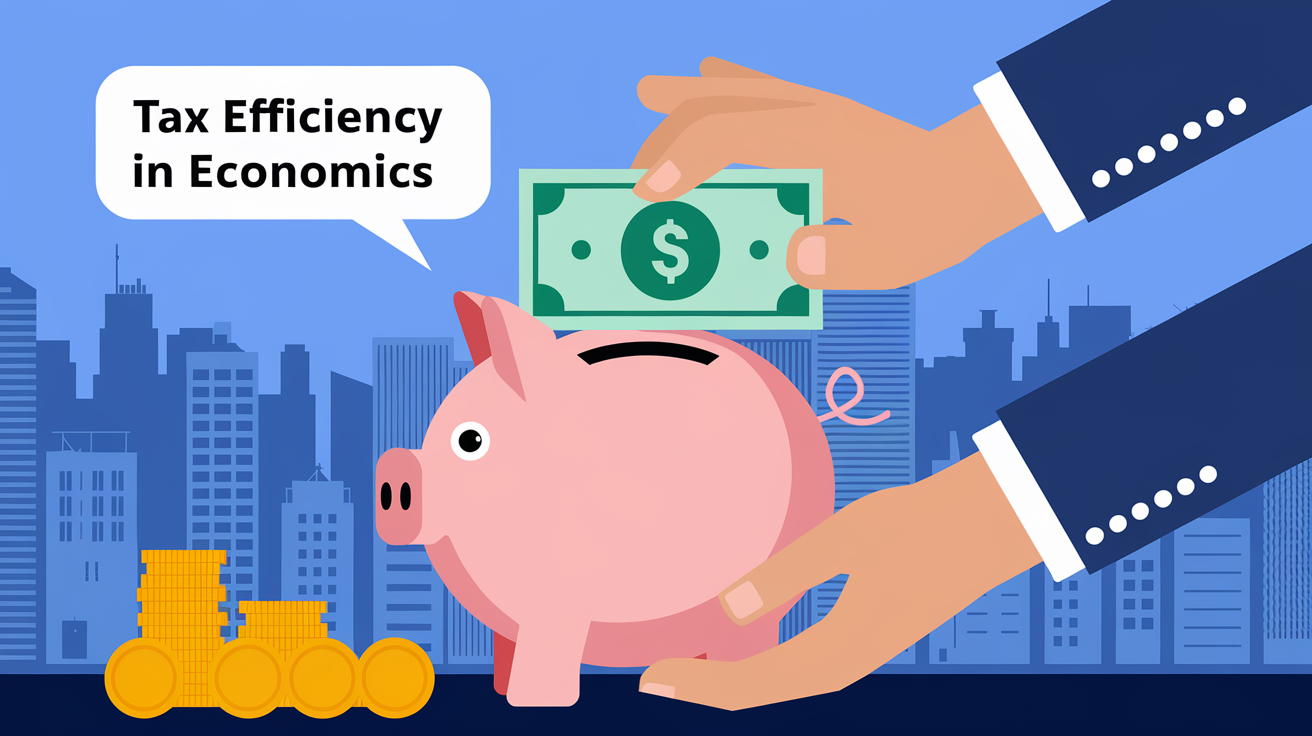
What is Tax Efficiency in Economics?
Understand tax efficiency in economics, its impact on investments, and strategies to optimize your financial growth with smart tax planning.
Introduction
When managing your finances, understanding tax efficiency can make a big difference in how much money you keep. Tax efficiency means using strategies to reduce the amount of taxes you pay on your investments and income.
In this article, we’ll explore what tax efficiency means in economics, why it matters, and how you can improve it to grow your wealth smarter and faster.
What is Tax Efficiency?
Tax efficiency refers to how well an investment or financial strategy minimizes tax liability. The goal is to keep more of your earnings by legally reducing the taxes you owe.
In economics, tax efficiency is important because taxes can reduce the overall return on investments. A tax-efficient investment generates higher after-tax returns compared to a similar investment with higher taxes.
It measures the ratio of after-tax returns to pre-tax returns.
Higher tax efficiency means less money lost to taxes.
It helps investors keep more of their gains over time.
Why Does Tax Efficiency Matter?
Taxes can take a big bite out of your investment returns. Even a small difference in tax rates can significantly affect your wealth over the long term.
Here’s why tax efficiency is crucial:
- Maximizes wealth growth:
More money stays invested and compounds.
- Improves cash flow:
Lower taxes mean more available income.
- Reduces risk:
Tax-efficient portfolios often have better risk-adjusted returns.
- Supports long-term goals:
Helps you reach retirement or other financial targets faster.
Common Tax Inefficiencies in Investments
Some investments are less tax efficient because they generate taxable income frequently or have high turnover.
- Mutual funds:
Often distribute capital gains yearly, causing tax bills even if you don’t sell.
- High turnover stocks:
Frequent buying and selling can trigger short-term capital gains taxed at higher rates.
- Interest income:
Bonds and savings accounts generate interest taxed as ordinary income, which can be high.
How to Improve Tax Efficiency
There are several strategies you can use to make your investments more tax efficient.
- Use tax-advantaged accounts:
Invest in IRAs, 401(k)s, or Roth accounts to defer or avoid taxes.
- Choose tax-efficient funds:
Index funds and ETFs usually have lower turnover and fewer taxable distributions.
- Hold investments longer:
Long-term capital gains tax rates are lower than short-term rates.
- Tax-loss harvesting:
Sell investments at a loss to offset gains and reduce taxable income.
- Asset location:
Place tax-inefficient investments in tax-advantaged accounts and tax-efficient ones in taxable accounts.
Examples of Tax-Efficient Investments
Some investments are naturally more tax efficient and can help you keep more of your returns.
- Index funds and ETFs:
Low turnover means fewer taxable events.
- Municipal bonds:
Interest is often exempt from federal and sometimes state taxes.
- Growth stocks:
Typically generate capital gains rather than dividends, which can be deferred until sale.
Tax Efficiency and Economic Impact
On a broader scale, tax efficiency affects how resources are allocated in the economy. Efficient tax systems encourage investment and economic growth.
When investors keep more of their returns, they are more likely to reinvest, leading to:
Increased capital formation
More innovation and business expansion
Higher employment opportunities
Governments also design tax policies to balance revenue needs with economic incentives.
Conclusion
Tax efficiency is a key concept that helps you keep more of your investment returns by minimizing taxes legally. Understanding it allows you to make smarter financial decisions and grow your wealth effectively.
By using tax-advantaged accounts, choosing tax-efficient investments, and applying smart strategies like tax-loss harvesting, you can improve your after-tax returns and reach your financial goals faster.
What is the difference between tax efficiency and tax avoidance?
Tax efficiency means legally minimizing taxes through smart planning. Tax avoidance involves illegal methods to evade taxes. Tax efficiency follows the law, while tax avoidance does not.
How does tax efficiency affect retirement planning?
Tax-efficient strategies help your retirement savings grow by reducing taxes on withdrawals and investment gains, providing more funds for your retirement years.
Are index funds always tax efficient?
Index funds are generally tax efficient due to low turnover, but some distributions may still be taxable depending on the fund and your account type.
Can tax efficiency reduce investment risk?
Yes, by improving after-tax returns and cash flow, tax efficiency can enhance risk-adjusted returns and reduce the need to sell assets under unfavorable conditions.
What is tax-loss harvesting?
Tax-loss harvesting is selling investments at a loss to offset taxable gains, lowering your overall tax bill while maintaining your portfolio’s balance.