What Is War Economy? Key Features & Impact Explained
Explore what a war economy is, how it impacts nations, and key features shaping economic policies during wartime.
Introduction
Understanding a war economy is essential to grasp how countries manage resources during conflicts. When nations face war, their economic priorities shift dramatically to support military efforts and national security.
In this article, we’ll explore what a war economy means, how it functions, and the effects it has on societies and governments. You’ll learn why economies change during war and what that means for everyday life.
What Is a War Economy?
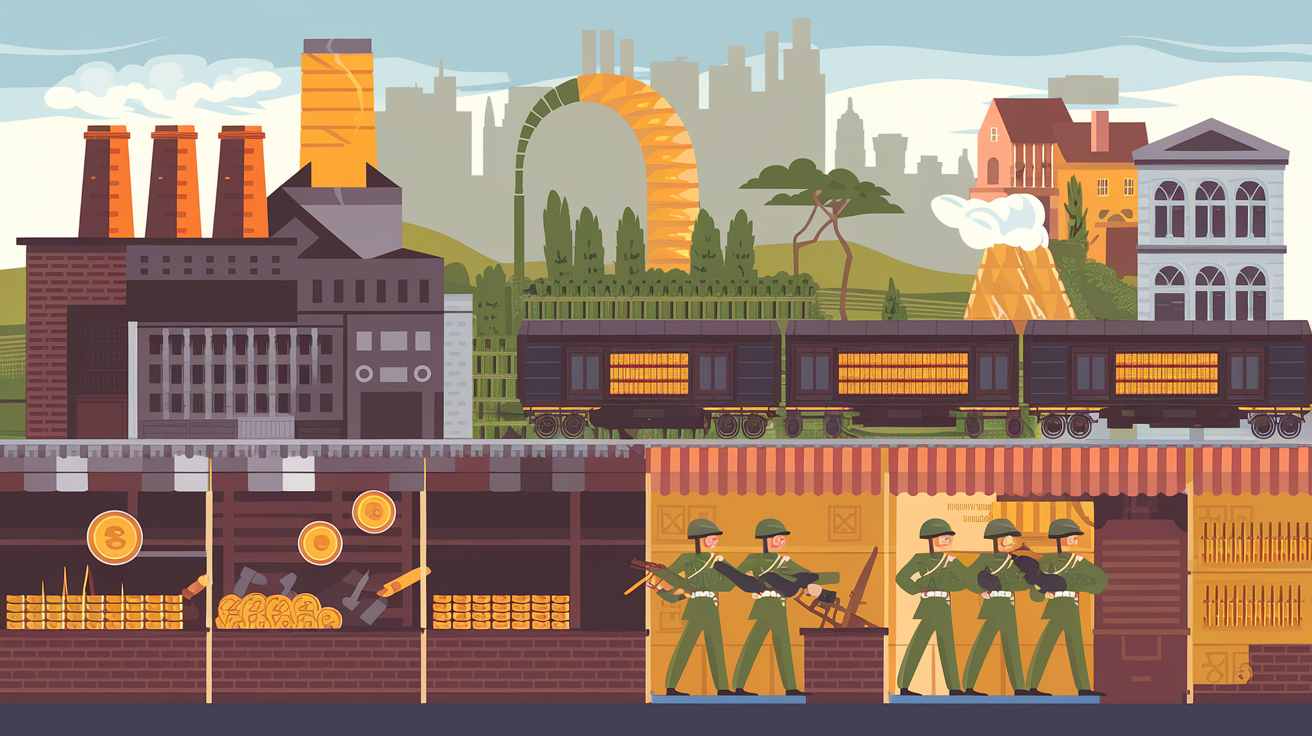
A war economy is an economic system focused on supporting a country’s war efforts. It involves reorganizing industries, labor, and resources to prioritize military needs over civilian consumption.
This shift often means governments take control of production, allocate materials to defense sectors, and regulate markets to ensure the armed forces have what they need.
Production of weapons, ammunition, and military vehicles increases.
Raw materials are diverted from civilian goods to military use.
Labor forces may be redirected to factories producing war supplies.
Governments may impose rationing on food and fuel for civilians.
Key Features of a War Economy
War economies share several common characteristics that distinguish them from peacetime economies. These features help governments mobilize resources efficiently during conflict.
- Centralized Control:
Governments often take direct control over industries and resources.
- Resource Allocation:
Priority is given to military production over consumer goods.
- Rationing and Price Controls:
To prevent shortages and inflation, rationing of essential goods and price limits are common.
- Increased Government Spending:
Huge budgets are allocated to defense and military operations.
- Labor Mobilization:
Citizens may be conscripted or encouraged to work in war-related industries.
How Does a War Economy Impact Society?
War economies affect everyday life in many ways. While they aim to strengthen a nation’s defense, they also bring challenges for civilians and businesses.
- Shortages of Consumer Goods:
Items like food, clothing, and fuel may become scarce due to rationing.
- Inflation Risks:
Increased government spending can lead to inflation if not managed carefully.
- Changes in Employment:
Many people shift jobs to support war industries, sometimes leading to labor shortages in other sectors.
- Economic Inequality:
Some groups may benefit from war contracts, while others face hardships.
- Innovation Boost:
War can accelerate technological advances, later benefiting civilian industries.
Examples of War Economies in History
Several countries have operated war economies during major conflicts, providing insight into how these systems work in practice.
- United States in World War II:
The U.S. government controlled production through agencies like the War Production Board, boosting military output and rationing consumer goods.
- United Kingdom during World War I and II:
Britain implemented strict rationing and centralized control to sustain its war efforts.
- Germany in World War II:
The Nazi regime directed resources heavily toward military production, often at the expense of civilian needs.
Transitioning from War Economy to Peace
After a war ends, countries face the challenge of shifting back to a peacetime economy. This transition involves:
Reducing military production and reallocating resources to civilian industries.
Dismantling rationing systems and lifting price controls.
Addressing unemployment as soldiers return and war industries downsize.
Managing inflation and stabilizing the economy.
This process can be complex and may require government intervention to avoid economic shocks.
Conclusion
A war economy represents a nation’s focused effort to support military conflict through economic restructuring. It involves central control, resource prioritization, and social adjustments to meet wartime demands.
While essential for national defense, war economies impact civilians and businesses in significant ways. Understanding these dynamics helps you see how economies adapt under pressure and the challenges of returning to peace.
What is the main goal of a war economy?
The main goal is to prioritize and allocate resources efficiently to support military operations and national defense during wartime.
How does rationing work in a war economy?
Rationing limits the amount of essential goods civilians can buy to ensure enough supplies are available for the military and to prevent shortages.
Can war economies lead to technological innovation?
Yes, wartime demands often accelerate research and development, leading to innovations that can benefit civilian industries later.
What challenges arise when shifting back to a peacetime economy?
Challenges include managing unemployment, reducing military production, stabilizing prices, and reallocating resources to civilian needs.
Do all countries adopt the same war economy strategies?
No, strategies vary based on a country’s political system, resources, and the nature of the conflict, but central control and resource prioritization are common.